Traditions
Anglican
Scripture, the creeds and common prayer in the Church of England and the wider Communion: catechism, articles and the writers its people have loved.
Writers
-
 Julian of Norwich
1342–after 1416
-
 John Jewel
1522–1571
-
 Lancelot Andrewes
1555–1626
-
 John Donne
1572–1631
-
 Jeremy Taylor
1613–1667
-
 Joseph Butler
1692–1752
-
 William Law
1686–1761
-
 John Henry Newman
1801–1890
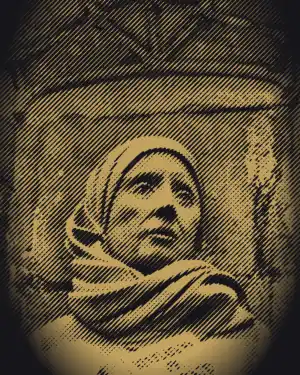
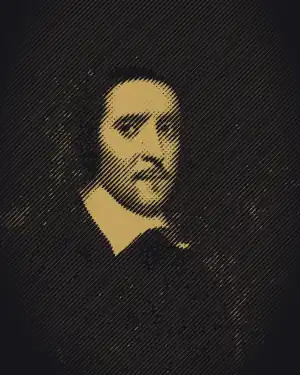
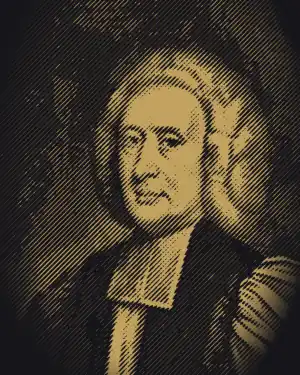
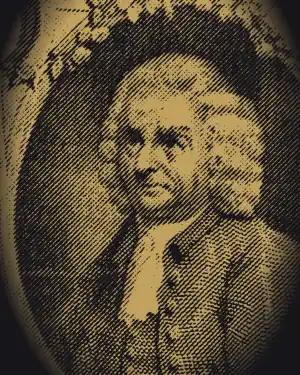
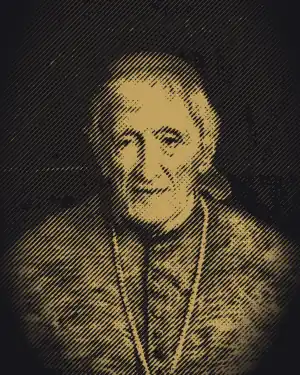
Anchoress at Norwich · 1342–after 1416
Julian of Norwich
An anchoress who lived in a cell beside St Julian's Church; her Revelations is the earliest book in English by a woman.
-
Mystical theology
Revelations of Divine Love
Sixteen visions of Christ's passion and love, received in 1373 and pondered for twenty years: the first book in English by a woman.
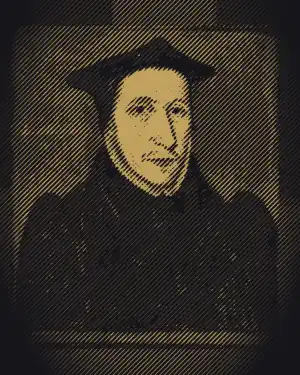
Bishop of Salisbury · 1522–1571
John Jewel
Elizabeth's bishop of Salisbury, whose Apology was the first full statement of why the English church stood apart from Rome.
-
Apology
An Apology of the Church of England
The first full defence of the Church of England against Rome (1562): why the English church left the Roman obedience and what it holds instead.
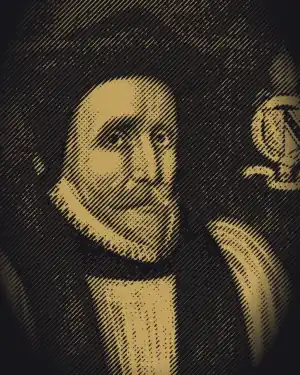
Bishop of Winchester · 1555–1626
Lancelot Andrewes
Preacher at the courts of Elizabeth and James and a translator of the Authorised Version; his private prayers are among the most used in the English church.
-
Devotion
The Private Devotions of Lancelot Andrewes
The prayers Andrewes wrote for himself, in Greek, over a long life: confession, praise and intercession for each day of the week.
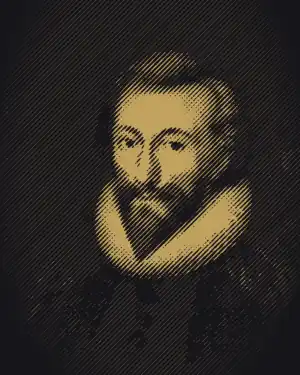
Dean of St Paul's · 1572–1631
John Donne
The poet who became Dean of St Paul's; his Devotions were written on what he thought was his deathbed.
-
Devotion
Devotions upon Emergent Occasions
Written in 1623 during a near-fatal illness: twenty-three stages of the sickness, each with a meditation, an expostulation with God and a prayer.
Bishop of Down and Connor · 1613–1667
Jeremy Taylor
Chaplain to Charles I and later a bishop in Ireland; Holy Living and Holy Dying were read in English homes for two hundred years.
-
Devotion · 4 parts
Holy Living
Taylor's rules for a Christian life (1650): how to use each day, and the practice of sobriety, justice and religion, with prayers for every need.
-
Devotion · 5 parts
Holy Dying
Taylor's companion to Holy Living (1651): how to prepare for death, to bear sickness and to be visited as one dies.
Bishop of Durham · 1692–1752
Joseph Butler
Bishop of Bristol and then of Durham; his Analogy was the leading English answer to the deists and his sermons a classic of moral thought.
-
Sermons
Human Nature and Other Sermons
Butler's sermons at the Rolls Chapel (1726) on conscience, human nature, compassion and the love of neighbour and of God.
-
Apologetics · 2 parts
The Analogy of Religion
Butler's answer to the deists (1736): the course of nature raises the same difficulties as revealed religion, so the objections cannot decide against it.
Priest and writer · 1686–1761
William Law
A non-juring priest who lost his Cambridge fellowship for refusing the oath to George I; A Serious Call shaped John and Charles Wesley and George Whitefield.
-
Devotion
A Serious Call to a Devout and Holy Life
Law's call (1729) to take Christianity as the plan of one's whole life, told through portraits like Miranda and Flavia; it shaped the Wesleys.
Vicar of St Mary's, Oxford · 1801–1890
John Henry Newman
Leader of the Oxford Movement in the Church of England, who became a Roman Catholic in 1845 and a cardinal in 1879; the Apologia tells that journey.
-
Autobiography
Apologia pro Vita Sua
Newman's account (1864) of his religious opinions: the Oxford Movement, the Tracts, and the road from the Church of England to Rome.
-
Education
The Idea of a University
Newman's nine Dublin discourses (1852) and the lectures that followed: what a university is for, why theology belongs in it, and what it means to be an educated person.
-
Philosophy · 2 parts
An Essay in Aid of a Grammar of Assent
Newman's account (1870) of how we come to believe what we cannot prove: the difference between notional and real assent, and the illative sense that weighs probabilities into certainty.
More to read
-
Catechism
The Catechism of the Church of England
The short instruction in the Book of Common Prayer (1549, 1662) that every person was to learn before confirmation.
Fathers this tradition reads
Portraits are drawn in the site’s engraved style from paintings and prints on Wikimedia Commons: Julian of Norwich (David Holgate (statue, Norwich Cathedral); photograph Poliphilo; cc0); John Jewel (anonymous; public domain); Lancelot Andrewes (Unknown author; public domain); John Donne (After Isaac Oliver; public domain); Jeremy Taylor (Eden Upton Eddis; public domain); Joseph Butler (John Vanderbank; public domain); William Law (John Scott, engraving (1827); photograph National Galleries Scotland; cc by 4.0 (photograph); engraving of 1827, public domain); John Henry Newman (John Everett Millais; public domain).


