Traditions
Lutheran
The churches of the Reformation that follow Martin Luther: the confessions and catechisms that gather their teaching.
Writers
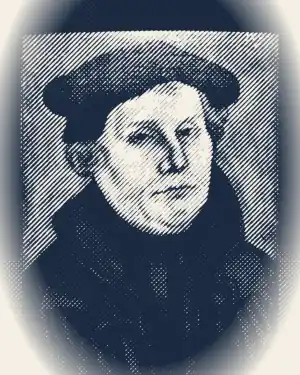
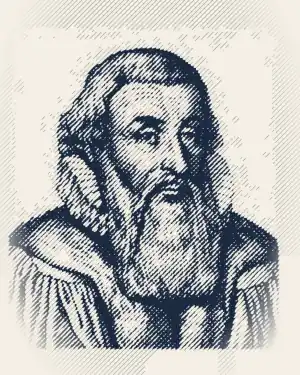
Reformer at Wittenberg · 1483–1546
Martin Luther
The Augustinian friar whose protest against indulgences began the Reformation; his catechisms taught the faith to households.
-
Catechism · 5 parts
The Large Catechism
Luther's teaching on the Ten Commandments, the Creed, the Lord's Prayer, Baptism and the Lord's Supper, written for pastors and heads of households.
-
Confession · 4 parts
The Smalcald Articles
Luther's statement of 1537 on what cannot be given up: Christ's work and justification, and what he rejected in the Mass, the monasteries and the papacy.
-
Catechism
The Small Catechism
Luther's short catechism of 1529 for the household: the Commandments, the Creed, the Lord's Prayer, Baptism, confession and the Lord's Supper.
-
Treatise · 10 parts
The Bondage of the Will
Luther's answer (1525) to Erasmus's defence of free will: he held that God's will alone decides, that the will is bound by sin, and that salvation comes by grace alone. He called it the one book of his worth keeping.
-
Reformation writings · 4 parts
The Ninety-Five Theses and the Three Primary Works
The Theses of 1517 and the three treatises of 1520: To the Christian Nobility of the German Nation, On the Freedom of a Christian, and On the Babylonian Captivity of the Church.
-
Conversation
Selections from the Table Talk
Luther's talk at table, taken down by his students: on God's word and works, the world, Christ, sin and free will, the law and the gospel, prayer, and the diets of the Empire.
Professor at Wittenberg · 1497–1560
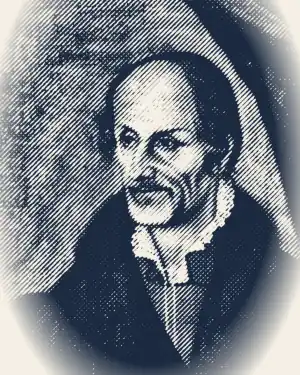
Philip Melanchthon
Luther's colleague and the scholar of the Reformation; he wrote the Augsburg Confession and its Apology.
-
Confession
The Augsburg Confession
The Lutheran confession of 1530, read to the Emperor at the Diet of Augsburg: twenty-eight articles on faith and on the abuses corrected.
-
Confession
The Apology of the Augsburg Confession
Melanchthon's reply (1531) to the Roman Confutation: a long defence of justification by faith and of the other articles of the Augsburg Confession.
Lutheran pastor and superintendent · 1555–1621
Johann Arndt
Pastor at Braunschweig and Celle; his True Christianity turned Lutheran piety toward the inner life and became a source of Pietism.
-
Devotion · 4 parts
True Christianity
Arndt's four books (1605–1610) on the inner life of faith: the image of God in man, Christ's life as the pattern, and the book of nature; the most read Lutheran devotional work after Luther's own.
Fathers this tradition reads
Portraits are drawn in the site’s engraved style from paintings and prints on Wikimedia Commons: Martin Luther (Lucas Cranach the Elder; public domain); Philip Melanchthon (Workshop of Lucas Cranach the Younger; public domain); Johann Arndt (Unknown author; public domain).


