Traditions
Reformed
The Reformation churches shaped by John Calvin and the Swiss and Dutch reformers: catechism, confession and systematic theology.
Writers
-
 Huldrych Zwingli
1484–1531
-
 John Calvin
1509–1564
-
 Heinrich Bullinger
1504–1575
-
 Richard Baxter
1615–1691
-
 John Bunyan
1628–1688
-
 Samuel Rutherford
c. 1600–1661
-
 Jonathan Edwards
1703–1758
-
 John Flavel
c. 1627–1691
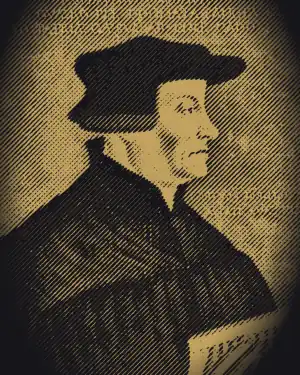
Reformer of Zurich · 1484–1531
Huldrych Zwingli
Priest of Zurich who began the Swiss Reformation in 1519 by preaching through the Gospels; he died as a chaplain at the battle of Kappel.
-
Confession
The Sixty-Seven Articles
The theses (1523) on which Zwingli defended the Reformation in Zurich: the gospel, the church, the mass, the saints, marriage, the magistrate, and the end of abuses.
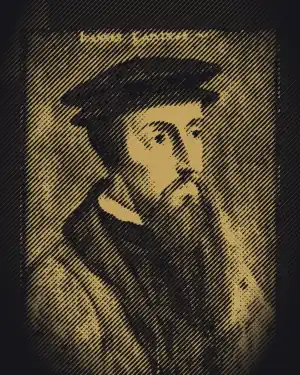
Reformer at Geneva · 1509–1564
John Calvin
The Frenchman who led the Reformation in Geneva; the Institutes of the Christian Religion is the standard statement of Reformed theology.
-
Systematic theology
Institutes of the Christian Religion, Book I: The Knowledge of God the Creator
Calvin's great summary of Christian doctrine, Book I: how God is known in creation and in Scripture, the Trinity, creation and providence.
-
Systematic theology
Institutes of the Christian Religion, Book II: The Knowledge of God the Redeemer
Calvin's Institutes, Book II: the fall, the law and the gospel, and the person and work of Christ the Mediator.
-
Systematic theology
Institutes of the Christian Religion, Book III: The Way We Receive the Grace of Christ
Calvin's Institutes, Book III: faith, repentance, justification, the Christian life, and predestination.
-
Systematic theology
Institutes of the Christian Religion, Book IV: The External Means of Grace
Calvin's Institutes, Book IV: the Church, its ministers and government, the sacraments of Baptism and the Lord's Supper, and civil government.
-
Commentary
Commentary on the Epistle to the Romans
Calvin's first biblical commentary (1540), verse by verse through Paul's letter; he held that the interpreter's chief virtue is lucid brevity.
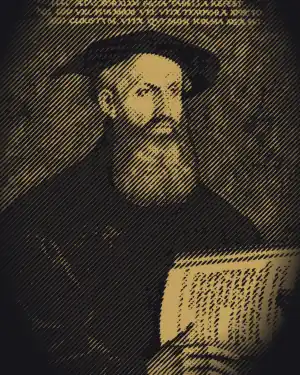
Zwingli’s successor at Zurich · 1504–1575
Heinrich Bullinger
Zwingli’s successor for forty years; his Second Helvetic Confession became the most widely accepted Reformed confession.
-
Confession
The Second Helvetic Confession
Bullinger's confession (1566), accepted by the Reformed churches of Switzerland, Scotland, France, Hungary and Poland: thirty chapters from Scripture to the magistrate.
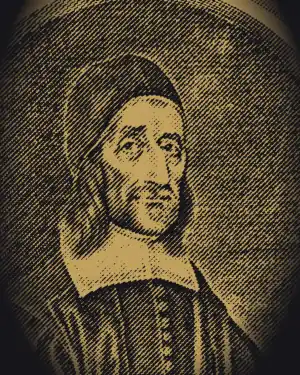
Puritan minister of Kidderminster · 1615–1691
Richard Baxter
Nonconformist pastor whose Reformed Pastor still defines the work of a parish minister.
-
Pastoral theology · 4 parts
The Reformed Pastor
Baxter's call (1656) to the ministers of Worcestershire to take heed to themselves and to the flock: personal instruction of every family, catechizing and the oversight of souls.
Baptist preacher and tinker of Bedford · 1628–1688
John Bunyan
A tinker who preached without a licence and spent twelve years in Bedford gaol, where he began The Pilgrim’s Progress.
-
Allegory · 3 parts
The Pilgrim’s Progress
Bunyan's dream (1678, 1684) of Christian's journey from the City of Destruction to the Celestial City, and of his wife Christiana's following: written in Bedford gaol, and the most widely read English book after the Bible.
-
Autobiography
Grace Abounding to the Chief of Sinners
Bunyan's spiritual autobiography (1666), written in prison: his youth, his long struggle with despair, his call to preach and his imprisonment.
Scottish minister and professor · c. 1600–1661
Samuel Rutherford
Minister of Anwoth, banished to Aberdeen in 1636, whose letters from exile are among the best-loved of the Scottish Reformation.
-
Letters
Letters of Samuel Rutherford
Letters (1627–1661) from the minister of Anwoth, written from his banishment at Aberdeen: pastoral comfort to the grieving, the persecuted and the dying, full of his love for Christ.
New England pastor and theologian · 1703–1758
Jonathan Edwards
Pastor at Northampton and the leading mind of the Great Awakening; he tested religious experience by its fruits.
-
Treatise · 5 parts
A Treatise Concerning Religious Affections
Edwards's test (1746) of true religion in the age of the Great Awakening: what the affections are, what are no certain signs of grace, and the twelve signs that are.
-
Sermons
Select Sermons of Jonathan Edwards
Nineteen sermons (1720s to 1740s), among them Sinners in the Hands of an Angry God, A Divine and Supernatural Light and The Excellency of Christ, by the preacher of the Great Awakening.
English Puritan minister · c. 1627–1691
John Flavel
Minister at Dartmouth in Devon, ejected in 1662 and still preaching in secret; he wrote about Christ and about the soul's walk with God in plain, warm sermons.
-
Sermons
The Fountain of Life Opened Up
Forty-two sermons (1671) on Christ in his essential and mediatorial glory: his person, his offices of prophet, priest and king, his humiliation and his exaltation, by the Puritan minister of Dartmouth.
More to read
-
Confession
The Westminster Confession of Faith
The confession of the Reformed and Presbyterian churches of the English-speaking world (1647): thirty-three chapters from Scripture to the last judgment.
-
Catechism
The Westminster Shorter Catechism
One hundred and seven questions, beginning "What is the chief end of man?": the most widely memorised catechism in the English-speaking Reformed world.
-
Confession
The Belgic Confession
The confession of the Dutch Reformed churches (1561, revised at Dort in 1619): thirty-seven articles from the one God to the last judgment.
-
Confession
The Canons of the Synod of Dort
The Synod's judgment (1618-19) on five points of doctrine raised by the Remonstrants: election, the death of Christ, human corruption and conversion, and perseverance.
-
Catechism
The Heidelberg Catechism
The catechism of 1563 in 129 questions, beginning "What is thy only comfort in life and in death?": misery, deliverance, gratitude.
Fathers this tradition reads
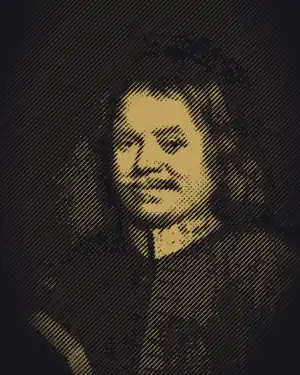
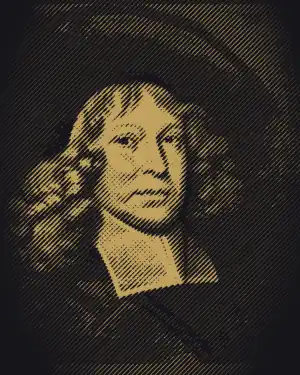
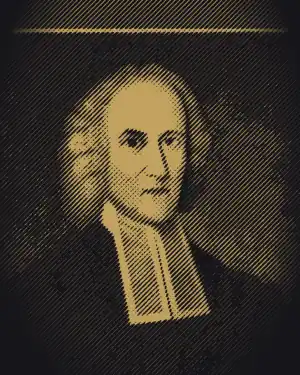
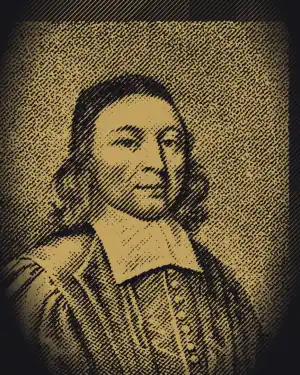
Portraits are drawn in the site’s engraved style from paintings and prints on Wikimedia Commons: Huldrych Zwingli (Hans Asper; public domain); John Calvin (Anonymous (France); public domain); Heinrich Bullinger (Hans Asper; public domain); Richard Baxter (Robert White; public domain); John Bunyan (Thomas Sadler; public domain); Samuel Rutherford (Unidentified painter / Robert Walker; public domain); Jonathan Edwards (Henry Augustus Loop after Joseph Badger; public domain); John Flavel (James Hopwood (c. 1752–1819), engraving; Folger Shakespeare Library; public domain).


